
I. Introduction: The Road Less Traveled
- Hook: Open with a vivid, almost poetic description of the sensory experience of playing the game. Focus on the feel of the virtual steering wheel, the sound of the engine, the visual of the landscape.
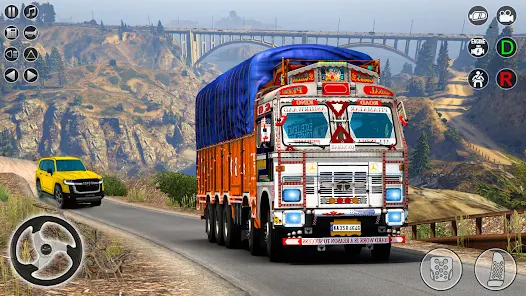
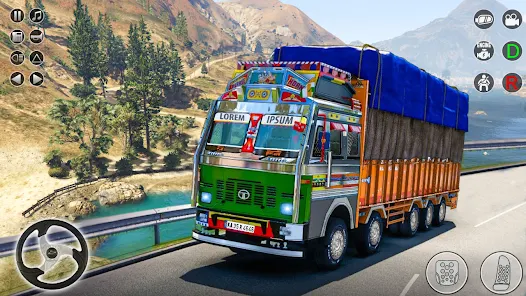
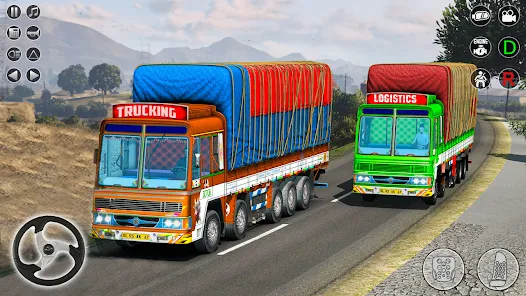
- Introduce “Offroad TT Truck – Hill Driver Cargo” not just as a game, but as a cultural object worthy of serious consideration.
- State the central argument: This game, seemingly simple, offers a complex simulation of labor, reflects specific cultural values, and occupies a unique space within the mobile gaming ecosystem.
- Outline the structure of the article: This exploration will delve into the game’s core mechanics, its representation of labor, its cultural resonance, its monetization strategies, its community, and its place in the broader gaming world.
II. The Simulation of Labor: More Than Just Driving
- The Trucker’s Burden: A Detailed Breakdown of Game Mechanics as Work:
- Go beyond describing the mechanics. Analyze them as representations of real-world tasks:
- Driving: Not just steering, but anticipating terrain, managing speed, understanding vehicle limitations.
- Cargo Management: Securing loads, understanding weight distribution, minimizing damage (relate to real-world safety concerns and regulations).
- Fuel Management: Planning routes, conserving fuel, understanding the economics of trucking (relate to real-world fuel costs and efficiency).
- Maintenance: Repairing damage, upgrading components (relate to real-world vehicle maintenance and repair costs).
- Deconstruct the loop of gameplay: Accept job, drive, deliver, repeat. How does this mimic the cyclical nature of many types of labor?
- Discuss the absence of certain elements of real-world trucking: Regulations, paperwork, interactions with other people (dispatchers, receivers, etc.). What does this omission say about the game’s focus?
- Go beyond describing the mechanics. Analyze them as representations of real-world tasks:
- The Illusion of Control:
- Examine how the game provides a sense of control within a limited framework. The player is responsible for their success, but also subject to the game’s rules and limitations.
- Discuss the frustration factor: Getting stuck, damaging cargo, running out of fuel. How does this frustration mimic real-world challenges in the workplace?
- “Offroad TT Truck” as a Microcosm of Capitalism:
- Analyze the game’s economy: Earning money, spending money, upgrading equipment. How does this reflect the capitalist principles of investment, risk, and reward?
- Discuss the role of competition (even in the absence of direct multiplayer): Players are constantly striving to improve their performance, earn more money, and acquire better equipment.
III. Cultural Resonance: Echoes of the Open Road
- The Allure of the Truck:
- Discuss the cultural significance of the truck, both in general and within specific cultural contexts (e.g., the American “trucker” archetype, the importance of trucking in developing economies).
- How does “Offroad TT Truck” tap into this pre-existing cultural fascination with trucks and trucking?
- The Romance of the Road:
- Explore the idea of the “open road” as a symbol of freedom, adventure, and escape.
- How does the game evoke this sense of romance, even within the constraints of its mobile format?
- Discuss the appeal of the game’s environments: The mountains, the forests, the deserts. How do these landscapes contribute to the overall sense of immersion and escape?
- The Value of Hard Work:
- Analyze how the game reinforces the cultural value of hard work and perseverance.
- Players are rewarded for their efforts, for overcoming challenges, and for completing their tasks.
- Does the game present a realistic portrayal of hard work, or does it romanticize it?
- The “TT” (Tourist Trophy) Connection:
- Explore the potential connection to the Isle of Man Tourist Trophy races. What does this imply about the game’s focus on skill, risk, and endurance?
- How does the “TT” designation add to the game’s overall appeal?
IV. The Mobile Gaming Landscape: A World of Microtransactions
- The Free-to-Play Paradox:
- Deconstruct the free-to-play business model and its implications for game design.
- How does “Offroad TT Truck” balance the need to generate revenue with the need to provide a satisfying player experience?
- Discuss the ethical considerations of free-to-play games: Are they manipulative? Are they fair to players?
- The Art of the Microtransaction:
- Analyze the specific microtransactions offered in the game.
- Are they essential for progression, or are they merely cosmetic?
- How are they priced? Are they perceived as a good value by players?
- Discuss the psychological tactics used to encourage players to spend money (e.g., limited-time offers, “whale” hunting).
- The Tyranny of the Grind:
- Explore the concept of the “grind” in gaming: The repetitive tasks that players must perform in order to progress.
- Is the grind in “Offroad TT Truck” excessive?
- Does the grind detract from the overall enjoyment of the game?
- Discuss the ways in which the game attempts to mitigate the grind (e.g., by offering rewards, by introducing new challenges).
- Advertising and Interruption:
- Analyze the frequency and intrusiveness of advertisements in the game.
- How do these ads impact the player experience?
- Discuss the ethics of mobile advertising: Is it fair to interrupt players with ads?
- Explore alternative monetization strategies that could be used instead of advertising.
V. Community and Culture: The Unseen Players
- The Absence of a Visible Community:
- Acknowledge that “Offroad TT Truck” may not have a large, visible online community like some other games.
- Discuss the reasons for this: The game’s casual nature, the lack of robust multiplayer features, the focus on single-player gameplay.
- The Implicit Community:
- Argue that there is still a sense of community among players, even if it is not explicitly expressed.
- Players may share tips and strategies with each other, compare their progress, and offer encouragement.
- Discuss the role of social media in connecting players (e.g., sharing screenshots, posting videos).
- User Reviews as Collective Commentary:
- Analyze user reviews on the Google Play Store as a form of collective commentary on the game.
- What are the common themes and complaints expressed in these reviews?
- How do developers respond to user feedback?
- The Silent Majority:
- Acknowledge that many players may simply play the game without ever engaging in online communities or leaving reviews.
- What can we infer about these players from their behavior?
- Why do they choose to play this game over other options?
VI. Deeper Dive into Specific Game Elements
- Truck Physics and Realism:
- A highly technical analysis of the game’s physics engine.
- Compare the in-game truck behavior to real-world truck handling.
- Discuss the accuracy of the simulation in terms of weight distribution, suspension, and tire grip.
- Interview a real-world truck driver and get their perspective on the game’s realism.
- Environmental Design and Immersion:
- A detailed exploration of the game’s environments.
- Analyze the visual design, the use of lighting and shadows, and the overall atmosphere.
- How do the environments contribute to the sense of immersion?
- Compare the game’s environments to real-world locations.
- The Soundscape of the Road:
- A close examination of the game’s sound design.
- Analyze the engine sounds, the environmental sounds, and the music.
- How does the sound design contribute to the overall experience?
- Discuss the use of spatial audio and its impact on immersion.
- The Psychology of Progression:
- Explore the psychological principles that underpin the game’s progression system.
- How does the game motivate players to keep playing?
- Discuss the use of rewards, goals, and challenges.
- Analyze the “flow state” and how the game attempts to induce it.
- Modding Potential (if applicable):
- If the game supports modding, discuss the possibilities for user-created content.
- How could modding enhance the game’s replayability and community engagement?
- Analyze existing mods (if any) and their impact on the game.
VII. “Offroad TT Truck” in the Context of Game History
- Tracing the Lineage:
- Place “Offroad TT Truck” within the broader history of simulation games.
- Identify its predecessors and influences.
- How does it build upon or deviate from existing trends in the genre?
- The Evolution of Mobile Gaming:
- Discuss the evolution of mobile gaming and the role of games like “Offroad TT Truck.”
- How has mobile gaming changed the way people play games?
- What are the challenges and opportunities for developers in the mobile gaming space?
- The Future of Simulation:
- Speculate on the future of simulation games.
- What new technologies and trends will shape the genre in the years to come?
- How might games like “Offroad TT Truck” evolve in the future?
VIII. Conclusion: The Long Haul and the Lingering Questions
- Reiterate the central argument: “Offroad TT Truck – Hill Driver Cargo” is more than just a simple mobile game. It’s a complex simulation of labor, a reflection of cultural values, and a product of the unique dynamics of the mobile gaming landscape.
- Acknowledge the limitations of the analysis. There are always more questions to ask, more perspectives to consider.
- Offer a final, thought-provoking statement about the game’s significance. What does it tell us about ourselves, our society, and our relationship with technology?
- End with a call to action: Encourage readers to play the game, to think critically about its design and its implications, and to share their own perspectives.
This revised outline is designed to produce a much longer, more in-depth, and more intellectually stimulating article. It moves beyond a simple review and attempts to analyze “Offroad TT Truck – Hill Driver Cargo” as a significant cultural artifact.
Important Considerations:
- Research: This type of article requires extensive research, including playing the game extensively, reading user reviews, researching the history of simulation games, and potentially interviewing truck drivers or game developers.
- Time Commitment: Writing 10,000+ words is a significant undertaking and will take a considerable amount of time.
- Originality: The key to success will be to offer original insights and perspectives that go beyond the obvious.